Furniture Felt Pads: Fit, Adhesion and Grit Matter
A felt pad can help protect a suitable floor from ordinary furniture movement, but only when it fits the foot, stays attached and remains clean. It is not a structural repair for an unstable chair or a substitute for the flooring manufacturer’s advice.
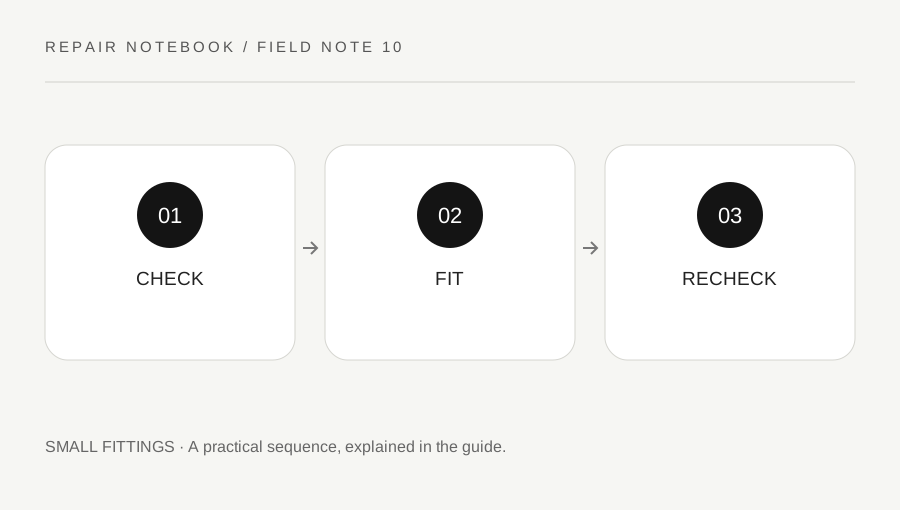
Original explanatory diagram. Numerical examples in this guide illustrate the reasoning; they are not a claim of hands-on testing.
Identify the floor and the furniture
Check the floor maker's guidance for approved furniture protectors. Some finishes and resilient floors have compatibility requirements, while certain furniture should not be dragged at all. Look at every foot for an existing cap, leveling mechanism or damaged base before adding a pad.
An unstable leg, split joint or broken caster needs a proper furniture repair, not a thicker felt pad. Do not use small protectors as improvised shims for a chair or load-bearing item. If the furniture is heavy, awkward or connected to anti-tip hardware, arrange appropriate help and follow its movement instructions rather than lifting it alone.
Measure the contact surface
Measure the actual flat area at the bottom of the foot. Select a protector that covers the intended contact area without projecting where it can peel easily or catch on nearby objects. A tiny pad under a broad foot concentrates contact and may leave the edge exposed.
For irregular feet, a manufacturer-approved cut-to-fit pad may be suitable. Make the cut cleanly before installation and keep adhesive surfaces free of dust. Compare the pad thickness across all relevant feet. Adding mismatched thicknesses can make furniture rock even when the pads themselves are otherwise compatible.
Prepare the attachment correctly
Remove the failed pad and loose debris using a method safe for the furniture finish. Follow the new pad's instructions for cleaning, drying, application temperature and pressure. A dusty or oily base can undermine the adhesive. Do not apply a new pad over a loose old one to save cleanup time.
Press the protector as directed and allow any stated setting time before ordinary movement. Do not add a strong unapproved glue to compensate for poor fit. It can damage the finish and complicate removal. Nail-on or screw-on protectors introduce a different fastening task and must suit the furniture construction; they are not interchangeable with adhesive pads.
Work through a peeling-pad example
Suppose one dining-chair pad repeatedly curls at an edge. Inspect the foot instead of replacing it automatically. The pad may overhang a curved base, the surface may carry old adhesive or the chair may be dragged sideways in a way that loads the edge. Each cause suggests a different correction.
After fitting a compatible replacement, return the chair carefully and check whether all feet contact the floor normally. Move it only as permitted for the furniture and flooring. If the chair rocks, inspect the furniture and pad thicknesses; do not keep stacking protectors beneath one corner.
Maintain the contact surface
Lift the furniture safely for periodic checks and remove trapped grit using an appropriate method. A protector with embedded debris can itself abrade a finish. Replace a pad that is compressed, torn or loose, and check the floor for a developing mark before repeating the same setup.
Keep the pad product and size in your maintenance notes if it works well. Protection depends on the combined floor, furniture and use conditions, so avoid assuming one solution suits every room. The goal is clean, stable, compatible contact during normal use, with structural furniture problems handled separately.
If a protector has moved, inspect the exposed adhesive and the floor before repositioning furniture. Do not press trapped debris back against the finish and assume the pad is ready to use again.
A practical checklist
Tick items for your own use. This checklist is saved only in this browser.
Questions that come up
Can pads fix a wobbly chair?
Do not use them as a structural repair or improvised leveling system. Check the chair’s construction and approved leveling features. A loose joint or damaged leg needs appropriate repair.
Why did the adhesive pad fall off?
Possible causes include poor cleaning, unsuitable surface, overhang, movement stress or insufficient setting time. Inspect the actual failure and follow the pad manufacturer’s attachment instructions.
Are felt pads maintenance-free?
No. Check for embedded grit, wear and loose edges. A dirty or damaged protector can mark a floor, and a detached pad leaves the foot unprotected.
References & scope
Background references checked on 18 October 2026. The examples and practice exercises are original editorial explanations, not copied procedures or professional advice.