A Squeaky Cabinet Hinge: Inspect Before You Lubricate
A noisy cabinet door can have more than one cause. This guide covers a small, ordinary cupboard door with accessible hardware. It does not cover heavy doors, spring-loaded mechanisms or a hinge that has pulled out of the cabinet.
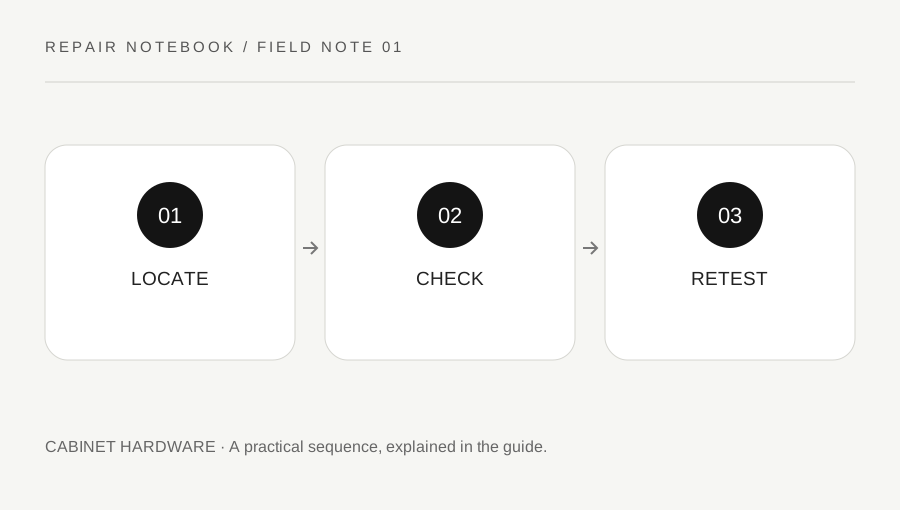
Original explanatory diagram. Numerical examples in this guide illustrate the reasoning; they are not a claim of hands-on testing.
Find the exact contact point
Empty the immediate working area and keep children away from the open door. Open and close it slowly while watching the hinges and the edges of the door. Listen for whether the sound happens throughout the movement or only as an edge brushes the frame. A scrape from the door meeting a shelf is a different problem from a squeak within a hinge. Do not begin by spraying the whole cabinet.
Look for a manufacturer name or part number, especially on concealed hinges. Some hinges contain dampers or coatings that call for specific maintenance. Photograph the hardware and the door position before changing anything. If a mounting plate is cracked or the cabinet material is crumbling, stop and plan a proper hardware repair.
Check accessible fasteners gently
For an ordinary small cupboard door, support the door while checking whether accessible mounting screws have visibly loosened. Use a correctly fitting hand screwdriver. Apply only enough pressure to seat a loose screw; continuing to turn a screw that no longer grips can enlarge the hole. Do not remove a hinge while the door hangs from the remaining hardware.
Separate fastening screws from adjustment screws. Concealed hinges often have several screws with different jobs. An adjustment screw is not a universal tightening point, and random turning can move the door out of alignment. Consult the hinge diagram if the purpose of a screw is unclear. A screwdriver that slips or a screw head that is already damaged is a reason to pause.
Use a suitable product sparingly
First remove accessible loose dust with a soft dry cloth. Avoid soaking exposed particleboard, finished wood or nearby stored food. If the hinge maker allows lubrication, choose the specified lubricant and apply the smallest practical amount directly to the relevant moving joint. Protect the surrounding finish and follow the product label for ventilation, handling and cleanup.
Do not treat penetrating fluid, cooking oil and a hinge lubricant as interchangeable products. A product can stain a finish, collect dust or be unsuitable for a damper. Never mix cleaning chemicals to remove residue. Open and close the door gently several times and wipe away excess from the outside. Keep lubricant away from the cabinet contents.
Work through a simple example
Suppose a cupboard squeaks near the top hinge, while a lower door corner also rubs the frame. Record these as two observations. Supporting the door reveals a slightly loose mounting screw; gentle tightening reduces the rubbing. After checking the hinge instructions, a small amount of approved lubricant resolves the remaining squeak. These are illustrative steps, not a promise that every noisy hinge has the same cause.
Test the full opening range after each change. If the rubbing remains, measure the gaps around the door and use the maker's alignment procedure rather than forcing the door shut. If the noise returns quickly, inspect again for looseness or damage instead of repeatedly adding more product.
Decide whether the repair is complete
A successful check includes smooth opening, secure mounting and a door that stays in its intended position. Put the contents back only after any product residue has been cleaned as directed. Keep a note of the hinge model, lubricant used and the original symptom so a recurring fault is easier to investigate.
Arrange qualified help if the door is heavy, the hinge mounting has failed, the cabinet is separating or a mechanism is under spring tension. Avoid improvised packing, random longer screws or modifications to hidden mechanisms. The useful outcome can be a clear diagnosis and the correct replacement part, even when a quick maintenance step is not sufficient.
A practical checklist
Tick items for your own use. This checklist is saved only in this browser.
Questions that come up
Can I spray every hinge at once?
Inspect one hinge first and protect the finish. Broad spraying obscures which joint caused the noise and leaves unnecessary residue. Follow the product label and the hinge manufacturer’s advice.
Should I use a power driver?
A hand screwdriver gives better control for this small check. If a screw will not seat with gentle pressure, investigate the hole and hardware rather than increasing torque.
What if a screw keeps spinning?
The fastener may no longer grip its material. Stop turning it. Identify the cabinet material and an appropriate repair or replacement with the manufacturer; do not rely on lubricant to fix a loose mounting.
References & scope
Background references checked on 18 October 2026. The examples and practice exercises are original editorial explanations, not copied procedures or professional advice.