A Small Insect Screen Tear: Patch, Rescreen or Replace?
An insect screen helps keep insects outside. It is not a fall barrier, security screen or a safe support for a child or pet. Assess an accessible removable screen on a stable work surface before choosing a modest repair.
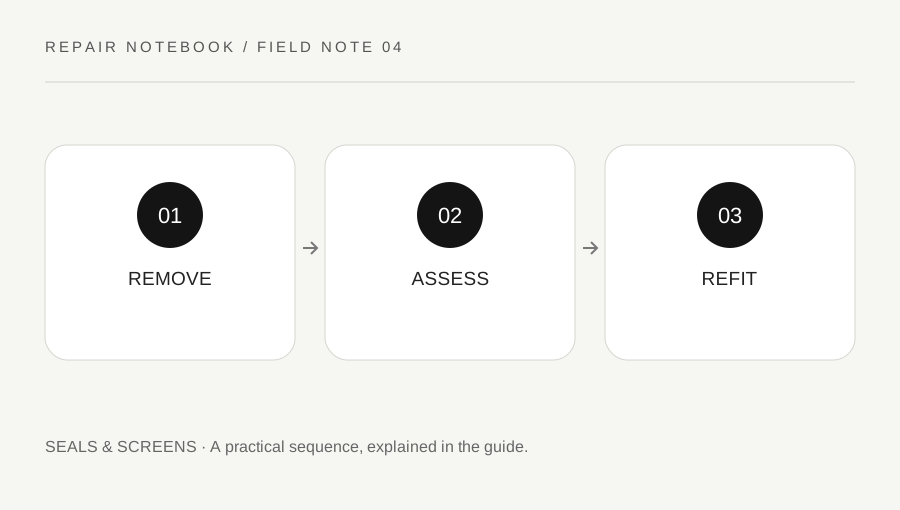
Original explanatory diagram. Numerical examples in this guide illustrate the reasoning; they are not a claim of hands-on testing.
Make access the first decision
Read the window maker's instructions for removing the screen and identify its tabs or retaining clips. Work from a safe indoor position where practical. Do not lean out of a window, stand on furniture or use an exposed ladder merely to reach a small tear. Arrange suitable help if the screen cannot be reached safely.
Keep children and pets away from the open window and maintain a secure barrier while the screen is removed. Inspect for sharp frame edges or broken components before handling. If the screen is part of a specified security, wildfire or fall-protection system, use the appropriate replacement and installer rather than an ordinary mesh patch.
Inspect the mesh and the frame together
Lay the removable screen flat on a protected surface. Photograph the tear and look for brittle mesh, loose corners, a bowed frame and missing retainers. A single small puncture in otherwise flexible mesh may suit a compatible patch. Multiple tears or mesh that splits when handled suggest that patching would only postpone another failure.
Identify the mesh type and the repair product's compatible materials. A patch for fiberglass mesh may use a different attachment from one designed for metal mesh. Avoid a sharp-edged improvised wire repair. Measure the damaged area and compare it with the patch maker's required overlap rather than covering only the visible opening.
Choose the smallest appropriate intervention
For a suitable small tear, follow the patch manufacturer's cleaning, alignment and application instructions. Keep the mesh relaxed and flat. Pulling too hard to make the damage disappear can distort nearby openings or bow the frame. If an adhesive patch requires a dry surface and a curing period, allow both before refitting.
When the whole mesh needs replacing, identify the frame system and the correct spline size before starting. Not every screen uses replaceable spline. Rescreening also needs controlled tension to keep the frame square. If the frame is damaged or the fastening system is unfamiliar, a replacement screen or a screen-repair shop can be a more reliable route.
Compare two practical cases
A small isolated hole in a sound removable screen may need only a compatible patch with the specified overlap. After fitting it, inspect both faces to ensure there are no lifted edges or protruding sharp parts. In contrast, a long tear beside a brittle edge seam points toward replacement mesh, even if several patches could temporarily cover it.
Neither case is solved by making the screen so tight that the frame bends. Check the frame diagonals and corner joints if the manufacturer provides a measuring method. A patch can remain visually obvious; its purpose is a tidy insect barrier, not the appearance or strength of an undamaged security component.
Refit and verify retention
Return the screen using its intended clips or channels. Check that every retainer is engaged and that the screen fits without forcing the window hardware. Confirm that the window opens, closes and locks normally, and that the repaired area does not rub against a moving sash.
Look again after several normal uses and after the product's specified curing period. If corners lift, mesh pulls away or the frame no longer sits securely, remove the screen safely and reassess. Keep the window opening protected during this process. Never describe a newly patched insect screen as childproof or petproof, and do not rely on it to carry any weight.
A practical checklist
Tick items for your own use. This checklist is saved only in this browser.
Questions that come up
Can an insect screen stop a child falling?
No. Ordinary insect screens are not fall protection. Use appropriate window safety measures and product-specific guidance independently of any mesh repair.
Should I patch a long tear at the edge?
An edge tear can reflect brittle mesh or poor retention. Inspect the whole screen and consider replacement mesh or a replacement frame rather than a chain of small patches.
Why did the frame bow after rescreening?
Excessive or uneven mesh tension can distort a light frame. Stop and use the manufacturer’s process or a repair service. A bowed frame may not retain securely in the window.
References & scope
Background references checked on 18 October 2026. The examples and practice exercises are original editorial explanations, not copied procedures or professional advice.