Choose the Screwdriver Tip That Fits Before You Turn
A slipping screwdriver can damage the screw head and the surrounding finish. Matching the recess, size and access angle is a useful first repair skill. This guide concerns accessible ordinary household hardware, with the component supported and no electrical work involved.
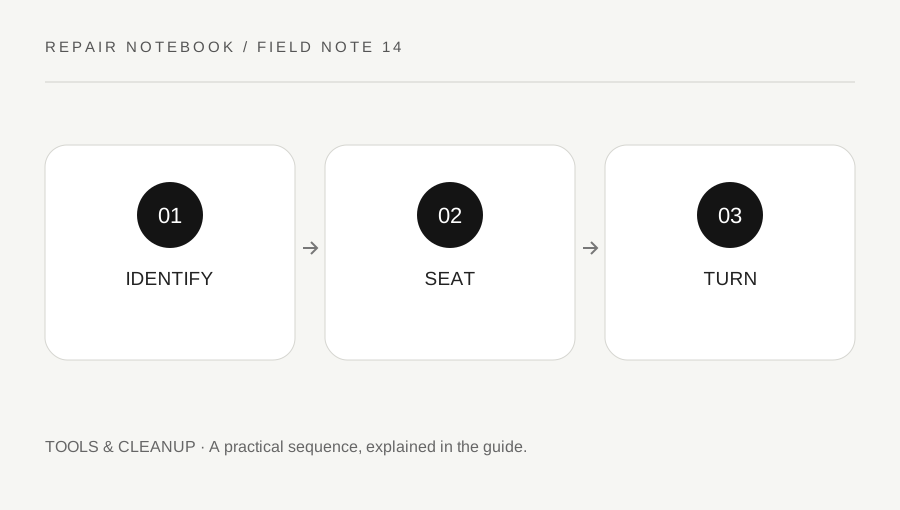
Original explanatory diagram. Numerical examples in this guide illustrate the reasoning; they are not a claim of hands-on testing.
Identify the recess instead of guessing
Look closely at the screw head under good light. Straight slots, cross-shaped recesses, square drives and internal hex shapes need their intended tips. Similar-looking cross recesses are not always interchangeable. Check the hardware instructions or a clear reference from the fastener maker when the shape is uncertain.
Clean only accessible loose debris with a method that does not damage the component. Paint-filled recesses and corroded screws may need a different removal plan; do not gouge through an unknown coating to create access. Photograph an unfamiliar screw before working. A bit that appears to catch only at its extreme tip is not a reassuring fit, and extra force is unlikely to improve that match.
Check size and access
Try the specified tip size with the driver held straight in line with the screw. It should seat fully and feel stable within the normal design clearance. A tip that is too small concentrates force on a narrow area; one that is too large may not enter fully. Do not use a knife, scissors or another improvised tool as a substitute screwdriver.
Check that there is room for your hand and the driver without twisting against a painted edge. A short driver or properly designed angled access tool may suit a confined location, but it still needs the correct tip and controlled alignment. Support a small cabinet knob or fitting so it does not rotate and scratch the front while you work.
Use a controlled example
Suppose a cupboard screw keeps slipping under a small cross-head driver. Stop and inspect the recess. The hardware documentation specifies a different tip profile and size. With the correct tool seated straight, gentle hand pressure lets the screw move without chewing the head. The important change was fit, not greater torque.
If the head has already rounded, do not keep repeating the same attempt. Assess the part's value, the surrounding finish and an appropriate extraction method with qualified help where needed. A small removable fitting can sometimes be replaced as a complete component, while destructive removal near concealed services or a valuable surface needs a carefully chosen plan. Power drivers can remove material rapidly and are not a cure for uncertain engagement.
Stop when the material changes the task
A screw that turns without gripping may have a damaged hole or thread. A screw that remains extremely tight may be seized, loaded or secured by a product-specific method. Neither condition is solved merely by selecting a larger handle. Keep structural furniture fixings, heavy hanging components and safety hardware outside a casual trial-and-error repair.
After a permitted adjustment, check that the fitting sits correctly and the screw head remains sound. Keep the successful tip size with the hardware record so the next maintenance check starts with the right tool. Store bits where their labels remain readable and replace worn tips. A good screwdriver fit is a repeatable observation, not a promise that every fastener should be forced to move.
Keep the screw and tool together in the record
For hardware that is maintained repeatedly, note the drive profile and size beside its part number. A clear close-up can help distinguish similar recesses later. Store a dedicated correctly fitting bit with the instructions where practical, while keeping tools away from children. If several screws on one item use different profiles, label their positions rather than assuming they all match. During reassembly, return each specified fastener to its intended role. A screw that looks similar can still differ in length or head seating. This small record reduces the temptation to use whichever tip happens to be nearest the next time.
A practical checklist
Tick items for your own use. This checklist is saved only in this browser.
Questions that come up
Can a larger screwdriver handle solve a stuck screw?
More leverage can also damage the head, thread or component. Confirm the drive fit and the reason for resistance first. Seized, loaded or safety-related fasteners need an appropriate repair plan.
Why does a new bit still slip?
It may be the wrong profile or size, the recess may be damaged, or the tool may be held at an angle. Stop and inspect rather than repeating a damaging turn.
When should I replace a driver bit?
Replace a worn or deformed tip that no longer fits properly. Inspect both the tool and the screw head; a fresh correct bit cannot restore a recess that has already been severely rounded.
References & scope
Background references checked on 18 October 2026. The examples and practice exercises are original editorial explanations, not copied procedures or professional advice.