A Loose Cabinet Knob: Match the Fastener Before Tightening
A cabinet knob can wobble because its screw is loose, too long, poorly seated or no longer engaging sound threads. A simple inspection is more useful than repeatedly tightening it harder. This guide concerns ordinary small cabinet handles and knobs.
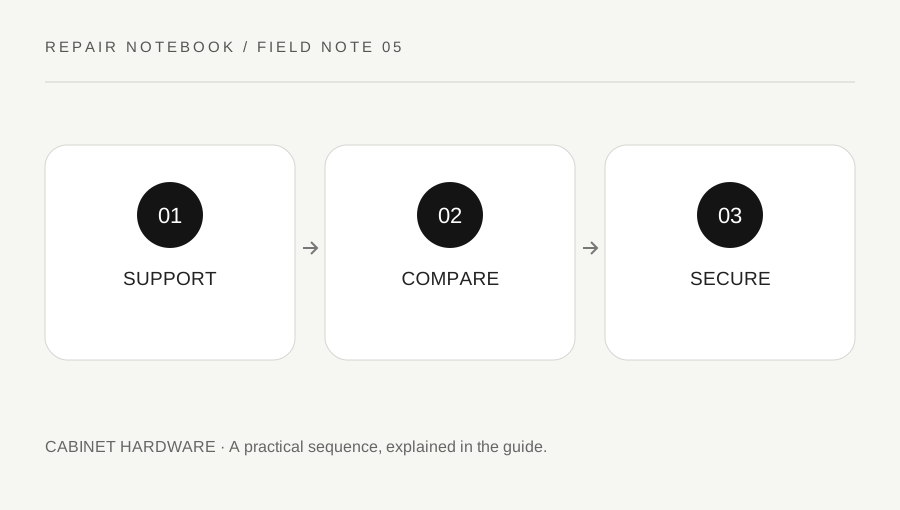
Original explanatory diagram. Numerical examples in this guide illustrate the reasoning; they are not a claim of hands-on testing.
Inspect from both sides
Empty the immediate area and open the door or drawer so the fastener is accessible. Support the knob with one hand while checking the screw head from inside. Protect the finished front from tools and jewelry. Look for a missing washer, an oversized mounting hole, a split panel or a screw head pulling into a soft material.
Note whether the knob turns around a stationary screw or the whole screw turns without tightening. These clues point to different causes. Avoid continued rotation against a damaged surface. If a handle has two fasteners, support it while inspecting both so that the remaining connection does not take an unusual twisting load.
Match length and thread deliberately
If the hardware instructions permit removal, support the knob and remove its fastener with the right screwdriver. Keep washers and spacers together. Compare the screw with the manufacturer's specified thread and length for the panel thickness. Similar-looking screws can have incompatible pitches; forcing one into the knob can damage the internal thread.
A screw that is too long may reach the end of a blind threaded hole before clamping the panel. One that is too short may engage too little thread. Do not solve either problem with random stacks of washers. Use the maker's specified fastener or a correctly matched replacement, and avoid cutting a screw unless an appropriate process and finishing method are available.
Protect the material around the hole
Check whether the panel hole is sound and appropriately sized. Cosmetic wall filler is not a substitute for a hardware mounting repair. If the surface is crushed, the panel is splitting or the hole has enlarged, assess the cabinet material and the correct repair system before reinstalling. Different choices apply to solid timber, laminate and particleboard.
Where a washer or backing component is specified, use its intended size and position. An oversized improvised plate may interfere with hinges or drawer contents. Avoid strong adhesives or thread-locking products unless the hardware manufacturer approves them; they can make future maintenance difficult and may damage a finish or plastic component.
Test a common length mismatch
Imagine replacing a knob on a thicker drawer front. The original screw now catches only briefly, so the knob feels secure at first and loosens again under normal pulling. Measuring the panel and checking the hardware instructions reveals the need for a different approved screw length. Tightening the short screw harder would not provide the missing engagement.
In the opposite example, a replacement screw bottoms inside the knob while a small gap remains at the panel. The knob still wobbles even though the screw feels tight. Correct length and thread, rather than greater force, address the mismatch. These examples show why the feel of the screwdriver alone is not a complete check.
Finish with an ordinary-use check
Hold the knob in the intended orientation and tighten by hand according to the maker's guidance. The hardware should sit securely without crushing the panel or distorting the finish. Open and close the cabinet normally several times; check that the back of the screw does not contact a shelf or moving part.
Recheck after a period of normal use. Record the hardware model and replacement fastener details if the cabinet uses several similar but different parts. Repeated loosening after a correct installation deserves inspection for damage or unsuitable hardware. A broken fixing on a heavy pull-out unit, wall cabinet attachment or other load-bearing component falls outside this small cosmetic hardware task.
A practical checklist
Tick items for your own use. This checklist is saved only in this browser.
Questions that come up
Can I use any screw that fits the hole?
No. The panel hole does not determine the knob’s internal thread. Match the manufacturer’s thread and required length, including the intended panel thickness and any specified washers.
Should I glue a loose knob?
Check the mechanical cause first. Unapproved adhesive can damage the finish and complicate later removal. A correctly matched fastener or replacement knob is generally easier to assess and maintain.
What if the panel is cracked?
Stop tightening it. Identify the cabinet material and the extent of damage. A compatible repair or replacement component is needed; increasing clamping force can make the split or crushed area worse.
References & scope
Background references checked on 18 October 2026. The examples and practice exercises are original editorial explanations, not copied procedures or professional advice.