How Much Wall Paint? Calculate Area, Coats and Coverage Separately
A paint estimate becomes easier to check when room dimensions, openings, coat count and product coverage stay separate. Measure the surfaces you actually intend to paint, then use the selected product label rather than a universal coverage promise.
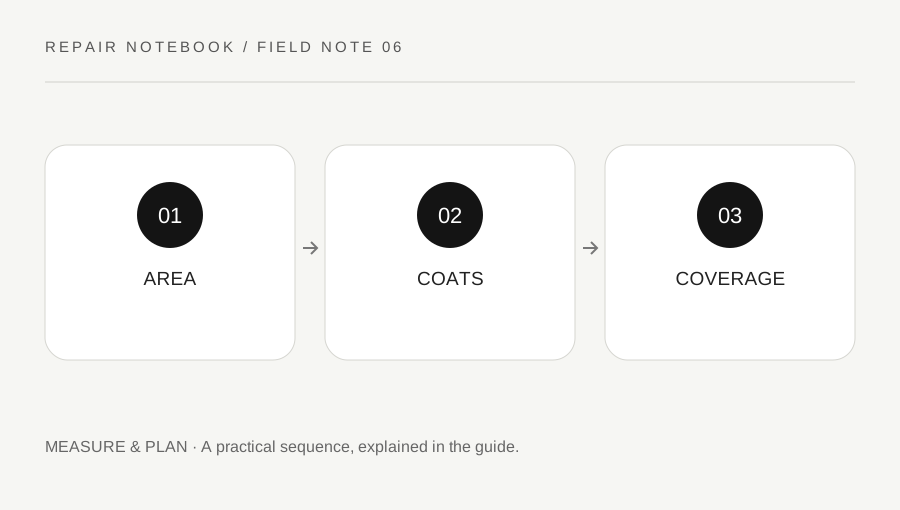
Original explanatory diagram. Numerical examples in this guide illustrate the reasoning; they are not a claim of hands-on testing.
Define the surfaces included
For a simple rectangular room, wall area is twice the sum of length and width, multiplied by wall height. Keep every dimension in the same unit. This calculation excludes the ceiling, trim, doors and built-in furniture unless you intentionally add them separately. Sloping ceilings, alcoves and projecting sections need their own measured rectangles or other appropriate shapes.
Measure openings that will not receive this paint and total their area. Subtract them once from the wall area. Do not subtract a whole wall simply because a cabinet covers part of it unless that section truly will not be painted. Write down these choices so someone else can understand what the estimate includes.
Read coverage and coating instructions
Coverage is an area per unit of paint, usually stated for one coat under specified conditions. A label range reflects factors such as surface texture and absorbency. Choose an appropriate planning figure within the actual product guidance. Do not assume the most optimistic coverage applies to rough, porous or newly repaired walls.
Use the coating system's recommended number of coats. Primer is a separate product estimate when required; calling a topcoat self-priming does not settle every substrate or stain issue. Significant colour changes can also affect the finished result. Check manufacturer guidance for the actual surface and condition before choosing paint quantities.
Work through a metric example
Consider a rectangular room 4 metres long, 3 metres wide and 2.4 metres high. The wall area is 2 × (4 + 3) × 2.4 = 33.6 square metres. If unpainted openings total 3.6 square metres, the net area is 30 square metres. Two coats require coverage across 60 square metres of coating passes.
If the chosen planning coverage is 10 square metres per litre, the base estimate is 6 litres. A deliberately selected 10 percent allowance raises it to 6.6 litres. These numbers demonstrate the formula; they are not a product recommendation. Compare available tin sizes, batch matching and return policies before deciding what to purchase.
Use US and metric quantities consistently
For a US-unit calculation, use feet, square feet and coverage per US gallon throughout. A US gallon is approximately 3.785 litres; an imperial gallon is a different volume. Do not enter square metres per litre into a field expecting square feet per US gallon. Changing the unit selector in our estimator converts existing inputs so the physical example remains comparable.
Keep the allowance visible instead of hiding it inside an exaggerated wall measurement. Allowance can cover application losses, awkward details or a planned touch-up reserve, but its appropriate size varies. Rounding the calculated amount up to a purchase size is a second decision, not another coat.
Check preparation before ordering
Paint quantity is only one part of a suitable plan. Check surface condition, compatible primer, drying conditions, ventilation and the product label. Investigate dampness and loose coatings before covering them. Assess lead or other hazardous material concerns before preparation, especially in older buildings; avoid creating dust from unknown finishes.
Review the estimate if the scope changes. Adding the ceiling, changing to a different paint or discovering a textured wall invalidates some inputs. Keep the room sketch, net area, product coverage assumption, coat count and allowance together. The estimator provides a planning quantity and does not certify that a coating system will perform on an unsuitable surface.
A practical checklist
Tick items for your own use. This checklist is saved only in this browser.
Questions that come up
Does the estimate include primer?
No. Calculate primer separately using its own surface coverage and required coats. Check the topcoat and primer manufacturer’s compatibility and preparation instructions.
What happens when I change units in the tool?
The estimator converts dimensions, opening area and coverage to the other unit system. This preserves the same physical room and paint assumption rather than merely changing the field labels.
Why does the tin suggest a coverage range?
Surface texture, absorbency and application conditions affect practical coverage. Select a suitable planning value from the actual product guidance, then revise the estimate if the surface or product changes.
References & scope
Background references checked on 18 October 2026. The examples and practice exercises are original editorial explanations, not copied procedures or professional advice.